
The Promise vs. The Reality
You’ve seen what’s possible with AI-first marketing teams in Chapter 1: big results with small resources, marketing directors finally freed from chaos to focus on strategy.
But here’s what’s actually happening for most companies: AI is making their marketing worse.
Six months ago, you approved AI tools for your marketing team. The pitch was clear: faster content, consistent messaging, better results without hiring more people. You imagined finally getting solid returns from your marketing.
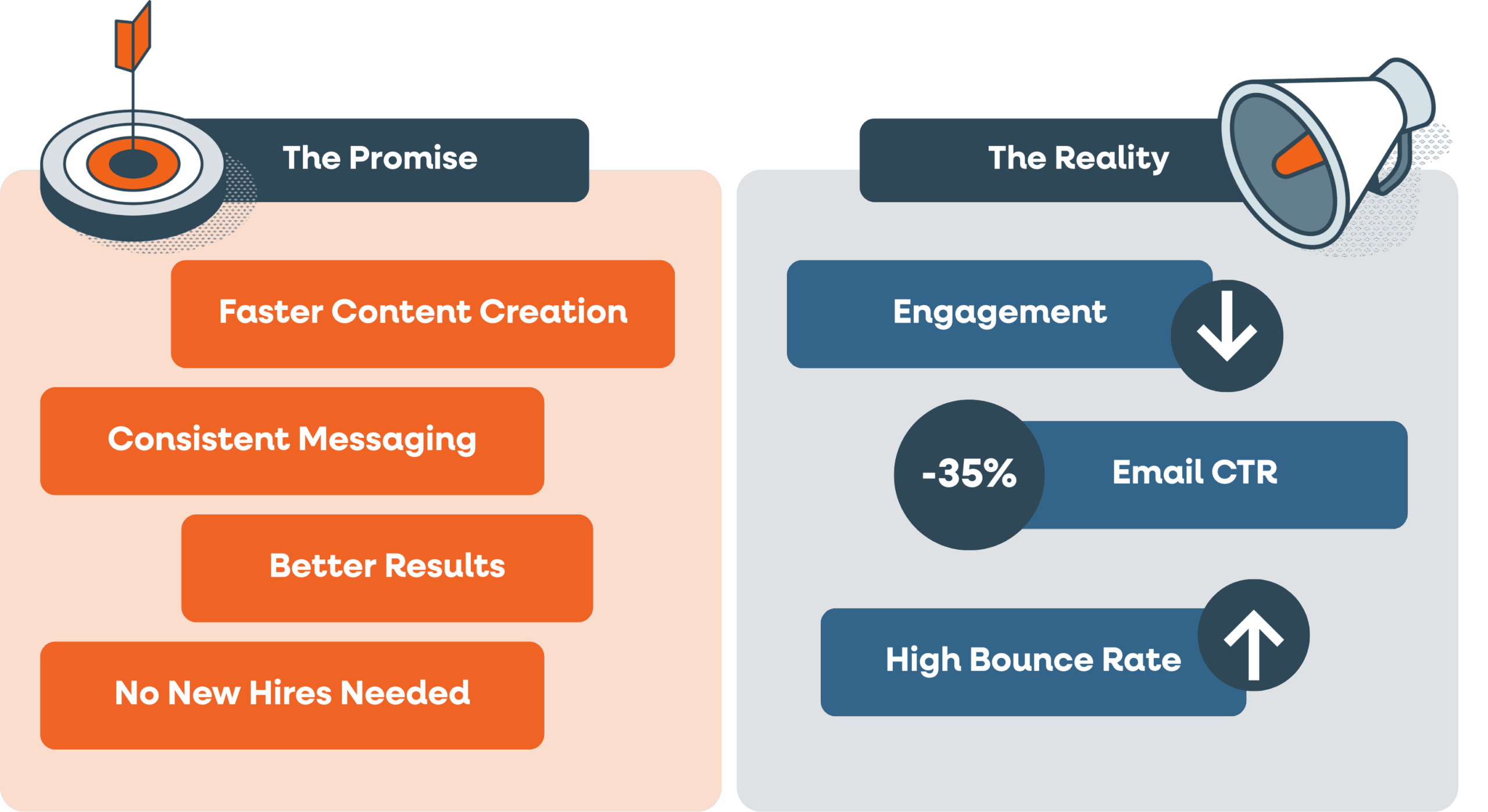
Today? Your marketing dashboard paints a troubling picture. Content engagement is down, email click-through rates have dropped 35%, and visitors are bouncing after reading just one paragraph.
What Went Wrong?
Your team dove into ChatGPT expecting quick wins. They’re creating more content, a lot more. But when you actually read it, something’s off.
It sounds… professional but bland. Well-written but empty. Like it could’ve been written by any of your competitors.
Your unique market position—the thing that justifies your pricing and sets you apart—is getting lost in AI content that sounds like everyone else.
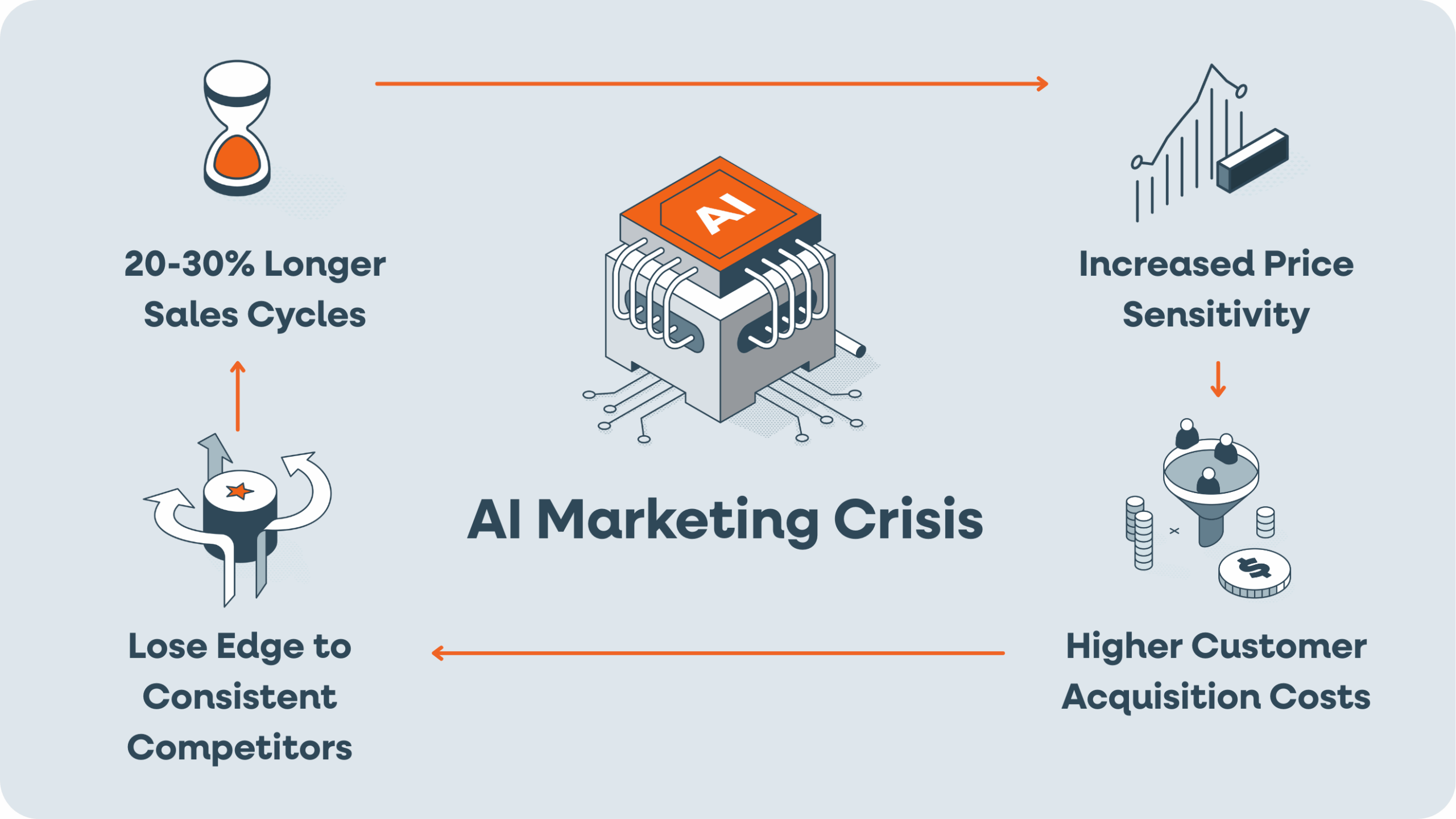
Quick check: Could your latest AI blog post have been written by a competitor? If yes, you’re facing the AI marketing crisis quietly hurting businesses everywhere.
Why This Is Killing Your Business
This isn’t just a content quality problem. It’s a trust problem.
B2B buyers don’t make quick decisions. They check out multiple vendors over months, comparing every touchpoint. When your AI creates messaging that fights your sales pitch, prospects lose faith. When what makes you different gets watered down into bland industry-speak, they can’t tell why you’re better.
The numbers tell the story.
Most B2B buyers stick with their first choice after making a shortlist. Yet 40% of good deals still end with no decision. Bland AI content pushes prospects toward the safest choice—sticking with what they have rather than risking a buy from a vendor whose position seems unclear.
If this sounds familiar, you’re not alone.
Over 80% of companies now use AI for marketing, but 60% worry it’s hurting their brand. Despite wide use, most leadership teams are quietly realizing their AI strategy isn’t delivering the edge they expected.
Three Ways AI Makes Your Marketing Worse (Not Better)
Your AI letdown stems from three basic errors that turn AI from helpful tool into business liability.
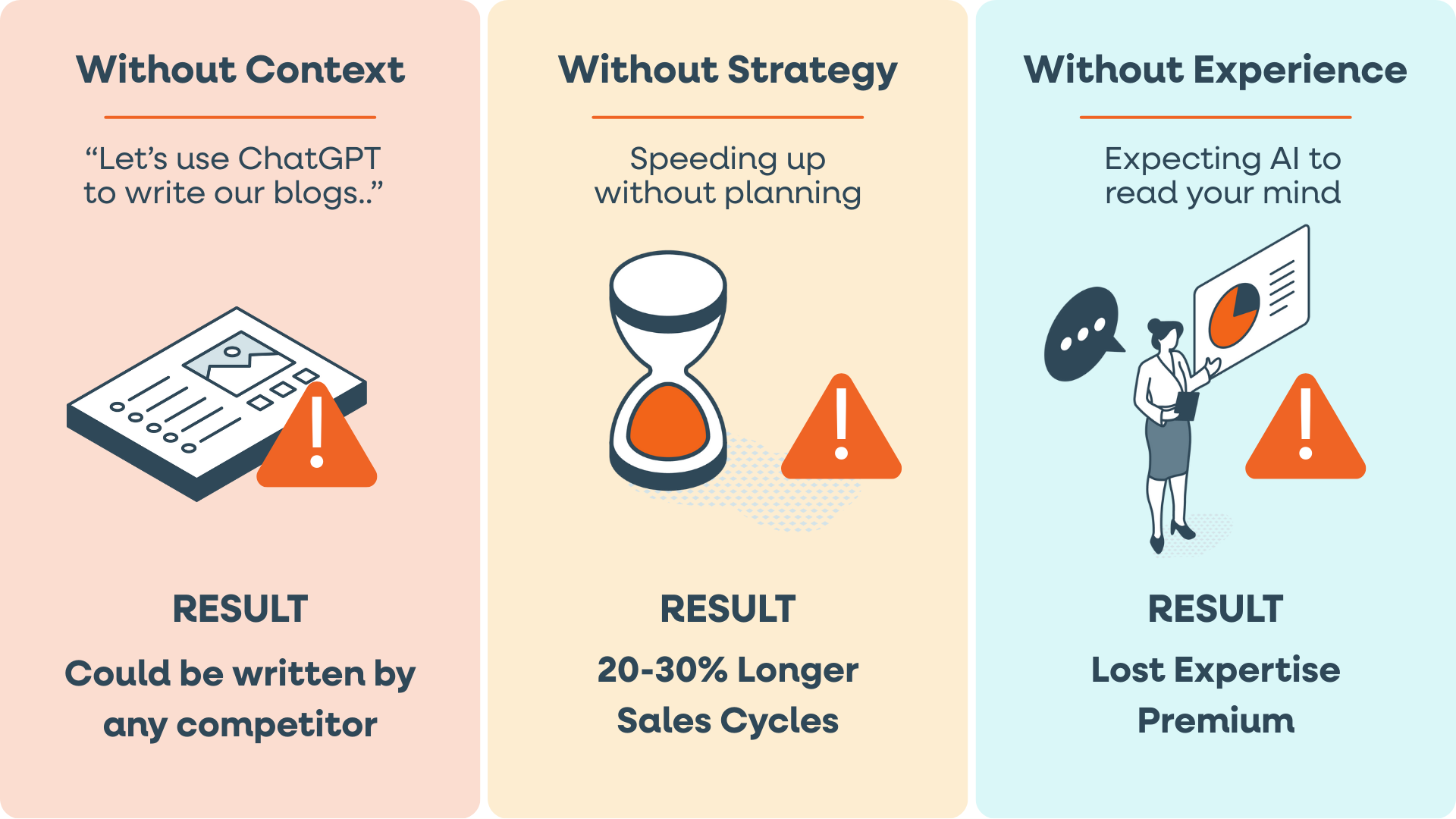
Mistake #1: Using AI Without Context
What happens: Teams treat AI like a faster content maker—”Let’s use ChatGPT to write blogs faster.” They don’t give context about your market position, customer insights, or what makes you different.
The real cost: AI defaults to bland industry language that wipe out everything unique about your solution.
Real example: One of our clients had built a patented process that got 30% higher prices than alternatives. Without building this differentiator into their AI knowledge base and process, every piece of content defaulted to bland industry language. This hurt years of positioning work and pricing power.
Mistake #2: Speeding Up Without Strategy
What happens: AI speeds up content making without smart planning. You’re scaling mixed messages across all customer touchpoints.
The real cost: Sales teams report more prospect confusion from mixed signals about what you can do, leading to 20-30% longer sales cycles and more deals ending in no decision.
Why it’s risky: Old marketing teams might make mixed messages slowly, limiting damage to specific touchpoints. AI teams with weak foundations make mixed messages at scale. This makes trust problems worse across every customer interaction at once.
Mistake #3: Expecting AI to Read Your Mind
What happens: Teams expect AI to just know your market position, customer needs, and competitive landscape. They don’t give it that info.
The real cost: You lose the “differentiated value” that allows for higher pricing and shorter sales cycles, as prospects can’t tell your product or solution from lower-cost alternatives.
The Root Cause: AI Scales Garbage (Good or Bad)
Here’s the basic rule that explains every AI marketing success and failure:
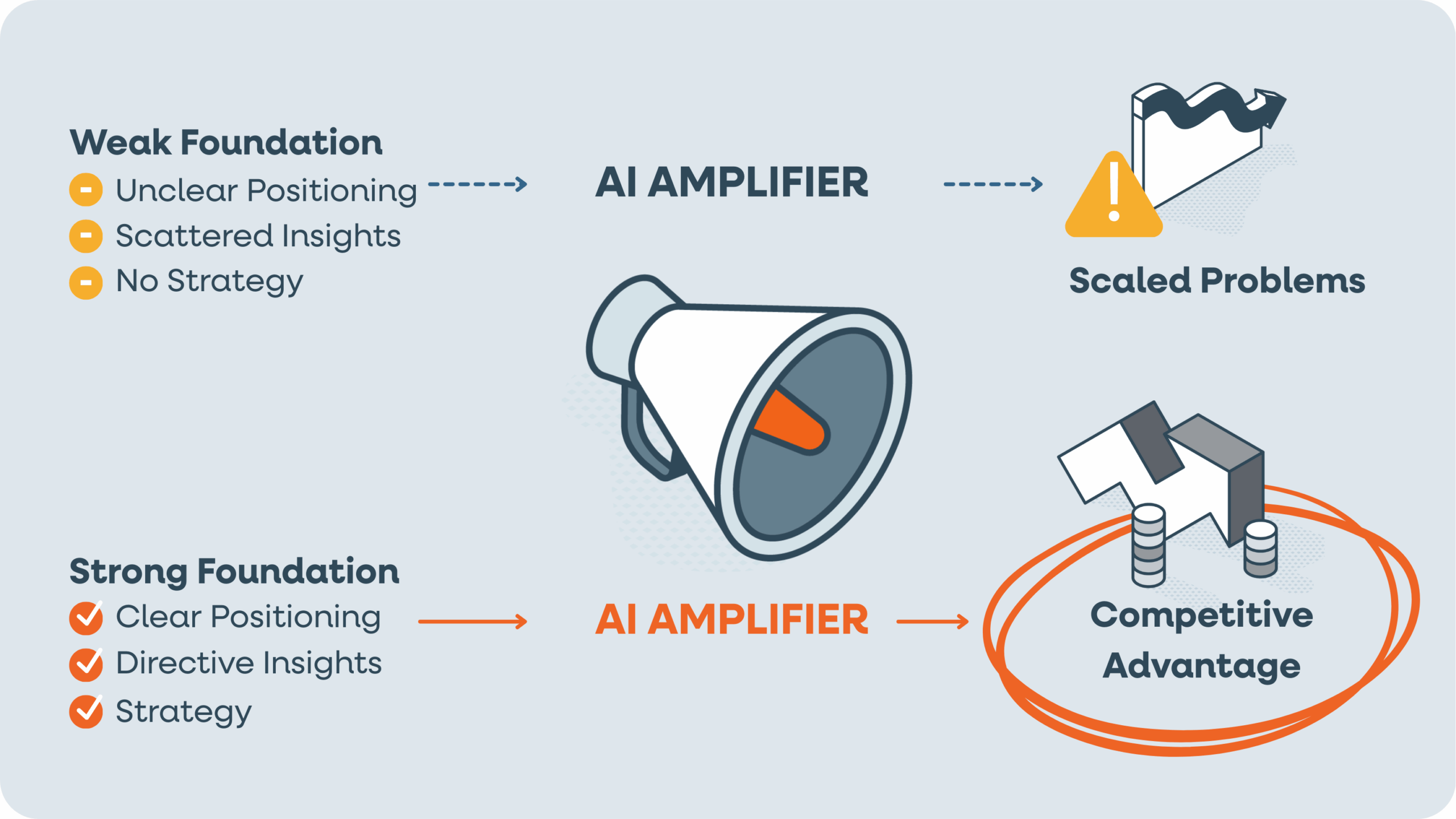
AI makes bigger whatever foundation you give it.
Feed AI unclear positioning and scattered customer insights? It scales that confusion across every touchpoint.
Give AI solid competitive intel, clear value props, and documented differences? It scales those advantages consistently across unlimited interactions.
This explains why identical AI tools produce breakthrough results for some companies while disappointing others. The difference isn’t the technology, it’s the quality of strategy and process being made bigger.
How We Learned This the Hard Way
Let me share our own painful experience with this rule.
When we first tried using AI to create proposals from sales calls, the results were bad. Missing info. Bland recommendations. Proposals that didn’t match what prospects actually needed.
Our first reaction? “AI isn’t ready for complex business uses.”
But then we dug deeper. Each salesperson was running discovery calls differently. Some asked about budget and decision-making process. Others focused on technical needs. Some explored business impact, others stayed surface-level.
The AI was trying to create good proposals from incomplete, mixed business intel.
Once we standardized our sales process—same discovery questions, same documentation approach, same competitive research—everything changed and, completely transformed results. Our sales cycle dropped from 20 days to 48 hours.
The lesson: AI doesn’t fix weak business processes—it exposes and makes them bigger.
While You’re Struggling, Competitors Are Winning
While you’re scaling confusion through tactical AI implementation, something dangerous is happening in your market.
Competitors who understand strategic AI implementation are building systematic trust advantages. They’re using AI to reinforce consistent positioning, accelerate trust-building, and establish market authority—while you’re inadvertently commoditizing your own solution.
The window is closing fast. 67% of companies expect to increase AI spending over the next three years, but only those building strategic foundations will capture lasting advantages.
What this means for your business:
- Companies building trust through AI will capture increasing market share and premium pricing
- Those eroding trust will find themselves competing primarily on price, with longer sales cycles
- The trust gap will widen as strategic AI implementations compound credibility advantages
- Recovery requires both fixing AI foundations AND rebuilding market trust
The Four-Pillar Solution to AI Marketing Success
Your AI disappointment isn’t a technology problem; it’s a foundation problem.
The companies achieving the transformation we explored in Chapter 1 didn’t start with better AI tools. They built something else first: a strategic foundation that transforms AI from a generic content generator into a trust-building engine.
This foundation consists of four connected pillars that provide the context AI needs to make bigger your competitive advantages rather than your weaknesses:
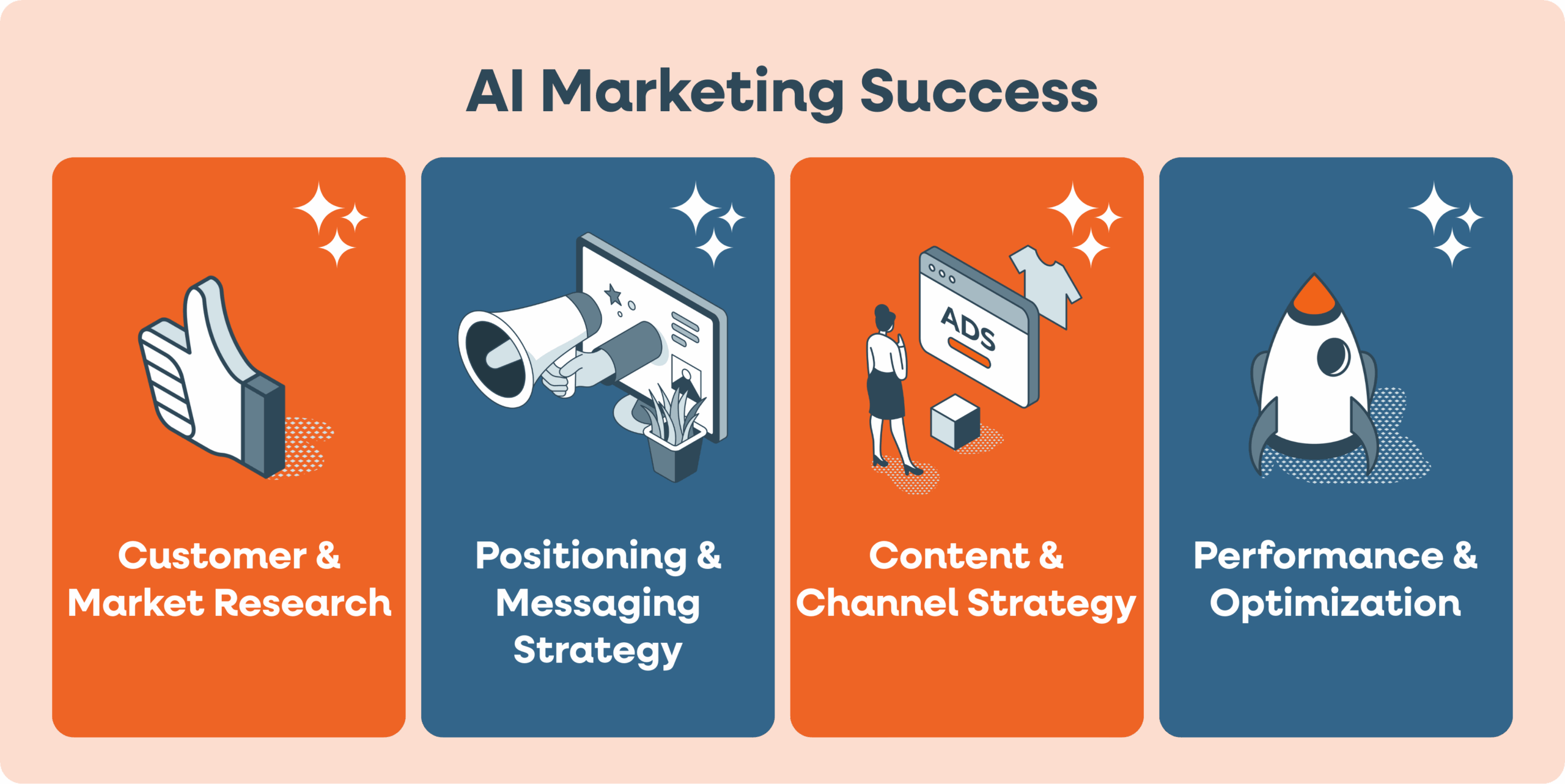
Pillar 1: Customer & Market Research → Deep understanding of customer needs becomes AI personalization that creates relevant, targeted content addressing real business challenges.
Pillar 2: Positioning & Messaging Strategy → Clear competitive differences become AI’s guidance system, ensuring consistent messaging that reinforces your unique value.
Pillar 3: Content & Channel Strategy → Approach to reaching prospects becomes AI execution workflows that build awareness and trust with future buyers over time.
Pillar 4: Performance & Optimization → Business metrics that connect to revenue become AI optimization criteria, creating feedback loops that improve results continuously.
Your Choice: Lead or Follow
The advantage is clear: Companies building these foundations now will establish 2-3 year market leadership while competitors continue struggling with quick fixes that erode customer confidence.
The question isn’t whether AI will transform how businesses compete—it’s whether you’ll lead that transformation through good implementation or fall behind while accidentally scaling your disadvantages.
Organizations building good AI foundations today will define tomorrow’s competitive landscape while others continue making their weaknesses bigger.
Ready to build the foundation that makes AI your competitive advantage instead of your liability? Let’s explore exactly how to construct those four pillars…